
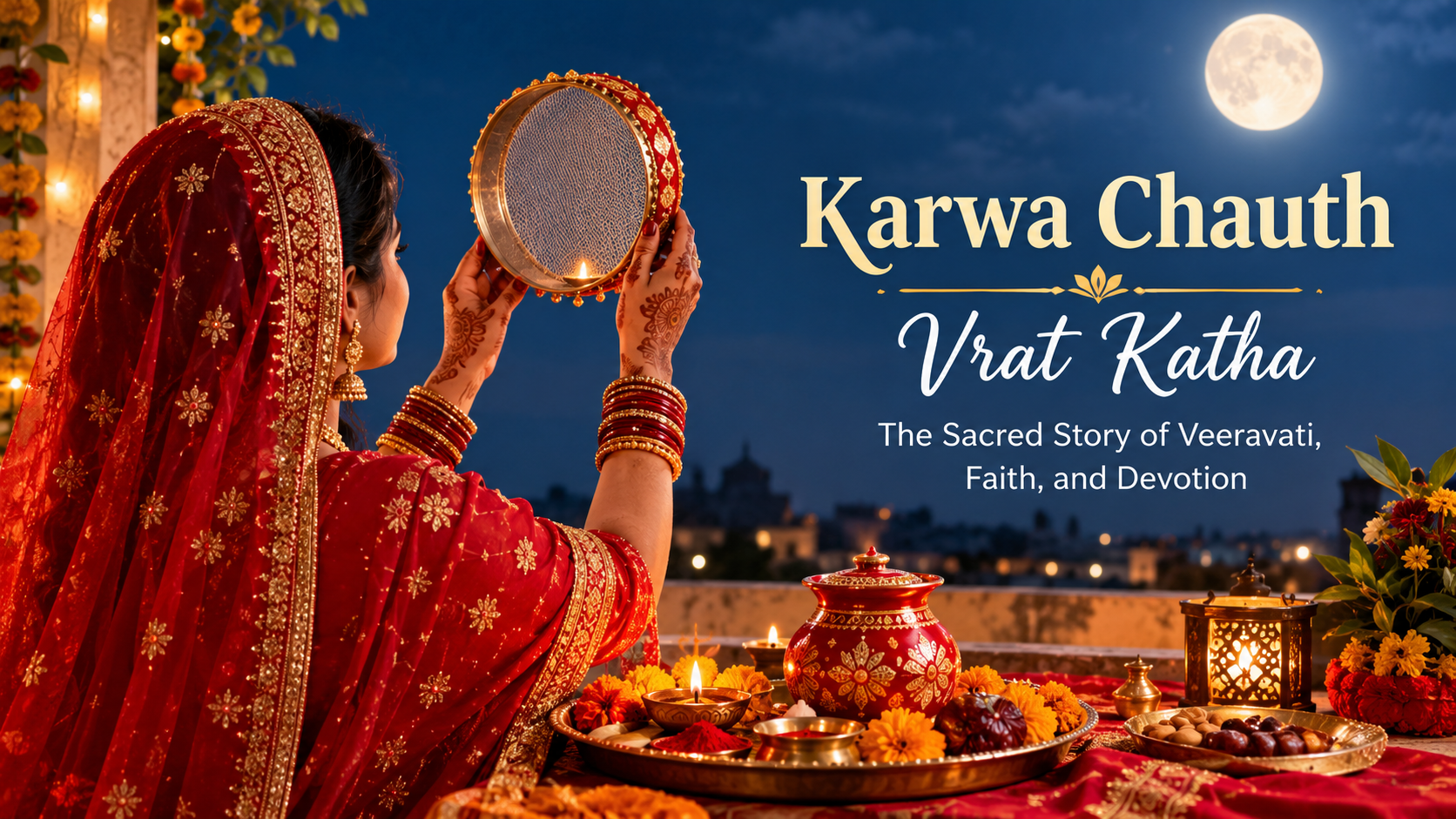
Karwa Chauth is a cherished Hindu festival celebrated with deep devotion in many parts of India. It is especially associated with married women who observe a day-long fast and pray for their husbands’ well-being, happiness, and long life. The festival brings together faith, family traditions, beautiful rituals, and the emotional bond shared by married couples.One of the most important parts of this celebration is the Karwa Chauth Vrat Katha, a traditional story recited during the evening worship. Among the best-known versions is the story of Veeravati, a young woman whose experience teaches the importance of patience, sincerity, and unwavering faith.The following article retells this traditional story in original English wording for readers who wish to understand its meaning and cultural importance.The Traditional Story of VeeravatiA Beloved Daughter in a Loving FamilyLong ago, there lived a young woman named Veeravati. She was the only daughter in a family with seven brothers. Her parents loved her dearly, and her brothers always tried to keep her happy. Growing up surrounded by their affection, she became the heart of her family.When Veeravati reached the appropriate age, she was married to a good man from a respected family. After her marriage, she continued to maintain a close relationship with her parents and brothers.During one visit to her parental home, the occasion of Karwa Chauth arrived. Veeravati decided to observe the sacred fast with devotion, following the customs she had learned from her family.Veeravati Observes Her First Karwa Chauth FastVeeravati began her fast early in the morning. According to the tradition followed in her family, she would not eat or drink until the moon appeared in the evening.At first, she remained cheerful and occupied herself with the day’s activities. As the hours passed, however, hunger and thirst began to weaken her. By evening, she was exhausted and found it difficult to remain standing.Her seven brothers watched their beloved sister with growing concern. They could not bear to see her suffer, and they began searching for a way to make her feel better.Their affection for Veeravati was sincere, but their attempt to help her would lead to an unexpected turn of events.The False Moon and an Unfortunate DecisionAs darkness approached, Veeravati’s brothers decided to create the appearance of a rising moon. In a commonly told version of the legend, one brother climbed a tree and placed a light behind a sieve. From a distance, the glow resembled the moon shining in the evening sky.They called Veeravati and told her that the moon had risen and that she could now complete her worship and eat.Weak from fasting, Veeravati believed her brothers. She looked at the light, offered her prayers, and ended her fast before the actual moon had appeared.Feeling relieved, she sat down to eat. But the joy of that moment did not last.The News That Changed Her LifeAccording to the traditional tale, Veeravati encountered troubling signs as she began her meal. Soon afterward, news arrived that her husband had died.The announcement shattered her happiness. She could not understand how such a terrible misfortune had occurred, and her heart filled with grief.When the circumstances of the early fast-breaking became known, Veeravati understood that she had mistaken an artificial light for the real moon. In the traditional telling, this event became the turning point of her story.Overwhelmed by sorrow, she prayed sincerely for her husband’s life to be restored. She refused to let despair destroy her faith.Veeravati’s Determination and Renewed DevotionVeeravati resolved to observe the sacred fast again with greater care and sincerity. Rather than abandoning her beliefs after experiencing hardship, she sought guidance and continued her prayers.In a widely circulated version of the katha, Goddess Indrani, the wife of Lord Indra, appears and explains the importance of observing the monthly Chaturthi fasts and completing the Karwa Chauth ritual properly.Following this guidance, Veeravati observes the prescribed fasts with devotion. When the next Karwa Chauth arrives, she performs the worship with renewed faith and waits for the true moon.Her devotion is ultimately rewarded in the traditional story: her husband returns to life, and the couple is reunited.Veeravati’s suffering gives way to happiness, and the tale concludes with the restoration of hope in her household.The story has since been remembered as a devotional account of faith, perseverance, and the importance of observing sacred traditions sincerely.The Story of Karwa and the CrocodileSome families also recite another traditional story associated with Karwa Chauth.Karwa was a devoted wife whose husband was once seized by a crocodile while bathing in a river. Hearing his cries, she rushed to help him. With courage and determination, she restrained the crocodile using a cotton thread and approached Yama, the deity associated with death, seeking justice.Karwa requested that her husband’s life be protected and that the crocodile be punished. When Yama initially hesitated, Karwa stood firm in her demand.Moved by her determination and devotion, Yama granted her request in the folk narrative. Her husband was spared, and the story became associated with the protective power of a wife’s prayers.Although details vary between regional versions, this tale is often remembered for its message of courage, commitment, and standing up for a loved one.Spiritual Significance of Karwa Chauth Vrat KathaThe Karwa Chauth story is more than a tale passed from one generation to another. For many devotees, it represents several important values.1. Faith and sincerity: The story encourages devotees to approach their religious observances with a sincere heart.2. Patience: Waiting for the actual moon symbolizes patience and respect for the traditions associated with the fast.3. Love and commitment: Veeravati’s concern for her husband reflects the emotional commitment celebrated by many families on this occasion.4. Hope during difficult times: Her determination to continue praying after experiencing grief conveys a message of perseverance.5. Family bonds: The festival brings families together through shared rituals, blessings, and traditional stories.These meanings are understood through religious belief and cultural tradition, and individual families may interpret the story in different ways.Why Is the Karwa Chauth Vrat Katha Read?The vrat katha is traditionally heard or recited during the festival’s puja. Many devotees consider listening to the story an important part of their observance.The gathering also gives women an opportunity to meet, exchange blessings, share festive customs, and preserve stories that have been passed down through generations.The practice differs from one region and family to another. Some households emphasize Veeravati’s story, while others also include the story of Karwa, prayers to Goddess Parvati, and other devotional traditions.Common Karwa Chauth Puja TraditionsWhile customs vary, a traditional celebration may include:- Preparing a decorated puja thali and karwa, a small pot traditionally made of clay or metal.- Wearing festive clothes and applying mehndi.- Offering prayers to deities according to family tradition.- Listening to the Karwa Chauth Vrat Katha.- Waiting for the moon to appear.- Offering arghya, or water, to the moon according to customary practice.- Breaking the fast and sharing a meal with family.For exact ritual instructions, devotees can follow the practices of their household, regional tradition, or religious guide.The Message of Karwa ChauthThe traditional story of Veeravati reminds devotees that patience and sincerity are valued in religious observances. The story of Karwa adds another dimension by portraying courage and determination in the face of danger.Together, these tales form part of the cultural heritage of Karwa Chauth. For many families, the festival is an opportunity to express affection, remember elders’ teachings, and celebrate the importance of care and companionship.Although the stories are rooted in traditional religious beliefs, their themes of hope, commitment, and perseverance continue to resonate with many readers.Frequently Asked Questions (FAQs)1. What is the Karwa Chauth Vrat Katha?The Karwa Chauth Vrat Katha is a traditional religious story recited during Karwa Chauth worship. One of its best-known versions tells the story of Veeravati and her experience of observing the fast.2. Who was Veeravati?Veeravati was a young woman described in the traditional katha as the only sister of seven brothers. Her story is associated with devotion, the Karwa Chauth fast, and her reunion with her husband.3. Why is the moon important on Karwa Chauth?The moon marks the traditional conclusion of the fast for many devotees. Women commonly offer prayers and arghya after sighting it, following their family’s customs.4. What is the story of Karwa and the crocodile?In another traditional tale, Karwa saves her husband from a crocodile through her courage and determination. She appeals to Yama to protect her husband’s life.5. When should the Karwa Chauth Vrat Katha be read?It is commonly recited during the evening puja, before moonrise, although the timing may differ according to regional and family customs.6. What is the main lesson of the Karwa Chauth story?The story is commonly understood as a lesson in faith, patience, perseverance, love, and devotion.ConclusionThe Karwa Chauth Vrat Katha remains an important part of a festival celebrated with devotion across many Indian communities. Through Veeravati’s story and the tale of Karwa, generations have shared traditional lessons about faith, courage, hope, and commitment.As families gather for prayers and await the moon, the katha connects present-day celebrations with cultural memories passed down through the years. Its enduring place in the festival reflects the importance of tradition, shared experiences, and the bonds that families continue to cherish.May Karwa Chauth bring peace, happiness, understanding, and prosperity to every household celebrating this sacred occasion.
Introduction